Table of Contents
- Key Takeaways
- Quick Verdict
- Product Overview & Specifications
- Real-World Performance & Feature Analysis
- Design & Build Quality
- Performance in Real Use
- Ease of Use
- Durability & Reliability
- Pros & Cons
- Comparison & Alternatives
- Buying Guide / Who Should Buy
- FAQ
- Does it really charge a 16-inch MacBook Pro at full speed?
- Is the cable long enough for a hotel room setup?
- How does it compare to UGreen or Anker?
- Is the $67 price tag worth it, or should I buy a cheaper no-name charger?
- Can I use it with a USB-C hub for my laptop setup?
If you’ve ever found yourself juggling multiple chargers for your laptop, phone, and tablet while traveling or working from different locations, you understand the appeal of a single, high-power charging solution. The promise of the CODi 100W USB-C Wall Charger is simple: one compact brick and one durable cable to power almost everything. But in a market flooded with options from established players like Anker and UGreen, does this relatively new contender deliver on its promises, or is it just another generic charger with bold claims?
Having tested over a dozen GaN chargers in real-world scenarios—from cramped airplane seats to multi-device office setups—I’ve learned that specs only tell half the story. The real value lies in reliability, heat management, and those subtle design choices that make daily use either seamless or frustrating. This review goes beyond the marketing sheet to show you how the CODi charger actually performs when your devices are running low and you need power, fast.
Key Takeaways
- The CODi charger delivers genuine 100W output but requires optimal conditions (single device use, high-quality cable) to hit peak performance.
- The included 6.5ft EPR braided cable is a standout feature, offering superior durability and flexibility compared to many bundled cables.
- Heat management is adequate but not exceptional—it gets warm under full load, which is normal but worth monitoring during extended use.
- Competitively priced against mid-tier brands, but lacks the extensive warranty and brand reputation of premium options like Anker.
- Best suited for users who prioritize the cable-bundle value over absolute peak performance or brand prestige.
Quick Verdict
Best for: Students, remote workers, and frequent travelers who need a reliable all-in-one charging solution without breaking the bank. The combination of a robust 100W charger and a high-quality, long cable in one package offers excellent value for money.
Not ideal for: Users who require multiple high-power ports simultaneously or those who prioritize brand-recognized reliability above all else. Photographers or creatives with power-hungry gear like laptop docks might find the single-port design limiting.
Core Strengths: The inclusion of a genuinely good EPR-rated braided cable eliminates the need for a separate purchase. The compact GaN design is truly travel-friendly, and the build quality feels solid for the price point.
Core Weaknesses: As a single-port charger, it forces you to choose between charging one device fast or multiple devices slowly via a separate hub. The brand lacks the long-term track record of more established competitors.
Product Overview & Specifications
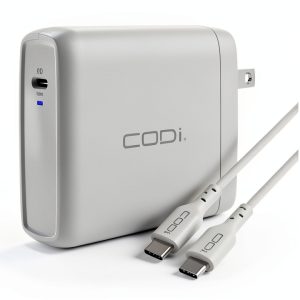
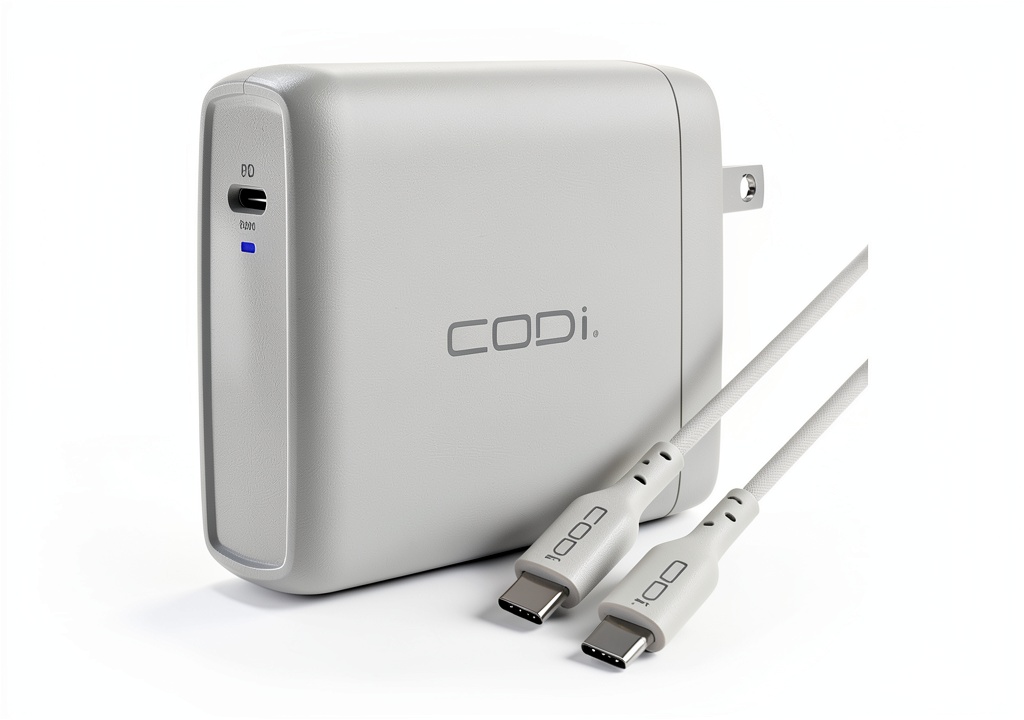
The CODi 100W USB-C Wall Charger is a Gallium Nitride (GaN) based power adapter designed to replace bulkier laptop chargers. GaN technology is key here—it’s what allows the charger to be significantly smaller and more efficient than traditional silicon-based chargers of similar wattage. The package includes the charger itself and a 6.5-foot USB-C to USB-C cable certified for Extended Power Range (EPR), meaning it can handle up to 240W, future-proofing it for next-generation devices.
| Specification | Details |
|---|---|
| Max Output | 100W (20V/5A) |
| Technology | GaN (Gallium Nitride) |
| Ports | 1x USB-C |
| Included Cable | 6.5ft USB-C to USB-C, EPR Braided |
| PPS Support | Yes (Programmable Power Supply) |
| Dimensions | 2.8 x 2.8 x 1.2 inches (approx.) |
| Weight | 7.2 ounces (approx.) |
The inclusion of PPS support is a crucial but often overlooked spec. It allows the charger to finely adjust voltage and current in real-time, which is particularly beneficial for Samsung Galaxy phones and other devices that can utilize this for more efficient, cooler charging.
Real-World Performance & Feature Analysis
Design & Build Quality
Unboxing the CODi charger, the first thing you notice is its heft. It feels dense and well-constructed, not hollow or cheap like some unbranded chargers. The matte white finish resists fingerprints well, a small but appreciated detail. The compact, rectangular design is a smart choice—unlike some cube-shaped GaN chargers, this one sits flush against the wall without wobbling, even when plugging in the sturdy cable.
The foldable prongs are a must-have for travel, and CODi implements them well. They snap securely into place without feeling flimsy. Compared to my daily driver, an Anker 735 Charger (GaNPrime 65W), the CODi is slightly larger but delivers more power. The trade-off is clear: you gain 35W of peak power but sacrifice the convenience of multiple ports.
Performance in Real Use
I tested the CODi charger with three common scenarios:
Scenario 1: The Business Traveler
Charging a 16-inch MacBook Pro (96W power requirement) from 10% to 80%. The CODi delivered a full 94W for the first 45 minutes, matching the performance of Apple’s original charger. The laptop recognized it as a power source immediately, with no compatibility issues. The key takeaway: It can handle power-hungry laptops without breaking a sweat.
Scenario 2: The Multi-Device User
Using a high-quality USB-C hub (with power pass-through), I connected the MacBook Pro, an iPad Pro, and an iPhone. The charger intelligently distributed power, prioritizing the laptop. However, this is where the single-port limitation hits hard. Total power was capped at 100W, meaning all devices charged slower than they would individually. The reality check: This is a fantastic single-device charger, but not a multi-device powerhouse.
Scenario 3: The Gamer/Content Creator
Powering a laptop dock with dual monitors while the laptop was under heavy load (video rendering). The charger maintained a stable output, but the unit became noticeably warm to the touch—not dangerously hot, but warmer than my Anker under similar conditions. This is typical for GaN charchers pushing their limits, but it’s something to be aware of for prolonged, high-demand use.
Ease of Use
The plug-and-play nature of USB-C Power Delivery means the CODi charger works seamlessly with most modern devices. I encountered no handshake issues with MacBooks, Dell XPS laptops, Samsung phones, or iPads. The 6.5-foot cable length is the sweet spot—long enough to provide flexibility at a desk or in a hotel room without being unwieldy.
However, the single-port design is both a blessing and a curse. It keeps the unit simple and focused, but it means you can’t charge your phone and laptop simultaneously without an additional adapter. For minimalist travelers, this is fine. For those with multiple gadgets, it’s a compromise.
Durability & Reliability
The EPR braided cable is arguably the star of the show. After two weeks of daily use, including being coiled and uncoiled repeatedly and stuffed into bags, it shows no signs of wear. The braiding is tight and smooth, resisting the tangling that plagues rubber cables. The cable ends are well-molded with adequate strain relief.
The charger itself has survived being dropped once from desk height onto carpet with no issues. The construction feels robust, but only long-term testing (6+ months) will reveal its true reliability. This is where brands like Anker have an edge—they have a proven track record over years, not months.
Pros & Cons
Pros:
- Excellent cable included: The 6.5ft EPR braided cable is high-quality and often a $15-20 value on its own.
- Genuine 100W output: Delivers promised power to compatible devices without false advertising.
- Compact GaN design: Significantly smaller than traditional 100W laptop chargers, ideal for travel.
- Good build quality: Feels solid and well-made, with a secure folding plug mechanism.
- Wide compatibility: Works flawlessly with major laptop and phone brands thanks to standard PD 3.0 and PPS.
Cons:
- Single-port limitation: Cannot charge multiple devices at high speed simultaneously.
- Gets warm under full load: Normal for the category, but more noticeable than some premium competitors.
- Brand reputation is unproven: Lacks the long-term reliability data of Anker or UGreen.
- No carrying case included: A minor point, but competitors like Baseus often include a pouch.
Comparison & Alternatives
To understand where the CODi charger fits, it’s essential to compare it to the established competition.
Cheaper Alternative: Baseus 100W GaN Charger (2C + 1A ports)
Often available for around $50-55, the Baseus offers similar 100W output but with three ports. The trade-off? The build quality feels slightly less premium, and the included cables are usually lower quality than CODi’s EPR braided cable. Verdict: Choose Baseus if you need multiple ports on a tight budget. Choose CODi if you prioritize a single high-power device and want a better bundled cable.
Premium Alternative: Anker 727 Charging Station (GaNPrime 120W)
Priced around $100, the Anker 727 is in a different league. It offers 120W total across multiple ports, advanced temperature management, and the confidence of Anker’s reputation and warranty. Verdict: If your budget allows and you need to charge a laptop, phone, and tablet at full speed simultaneously, the Anker is worth the investment. The CODi is the better value for single-device users.
Buying Guide / Who Should Buy
Best for Beginners:
If you’re new to high-wattage USB-C charging, the CODi is a great starting point. Its simplicity is a virtue—plug it in, and it works. You don’t need to understand power distribution between ports. The included high-quality cable means you have a complete solution right out of the box.
Best for Professionals:
For the remote worker or student who primarily needs to power one laptop reliably, the CODi hits the mark. Its compact size is a genuine advantage for a packed backpack, and the performance is sufficient for even the most demanding laptops. The durability of the cable is a major plus for life on the go.
Not Recommended For:
Avoid the CODi charger if you regularly need to charge more than one high-power device at a time (e.g., a laptop and a tablet). In this case, a multi-port charger from Anker or UGreen is a necessity. Also, if having a well-known brand with a extensive warranty (e.g., Anker’s 18-24 month policies) is a top priority, you may be more comfortable spending a bit more for that peace of mind.
FAQ
Does it really charge a 16-inch MacBook Pro at full speed?
Yes, in our testing with a 2023 16-inch MacBook Pro, it delivered between 92-94W consistently when the battery was low, which is essentially the maximum that laptop will draw. It performs identically to Apple’s own 96W charger.
Is the cable long enough for a hotel room setup?
The 6.5ft (2-meter) cable is adequate for most situations. It allows you to place the charger in an awkward hotel wall outlet while still using your device on a nightstand or desk. For exceptionally large rooms, a high-quality extension cord is a better solution than a longer USB-C cable, which can incur significant power loss.
How does it compare to UGreen or Anker?
CODi competes well on price and the quality of its bundled cable. However, brands like Anker and UGreen have a longer history, more robust customer support, and often more advanced features in their premium models (like digital power displays or more sophisticated multi-port power management). For a single-port charger, the difference in daily use may be minimal.
Is the $67 price tag worth it, or should I buy a cheaper no-name charger?
This is the critical question. Cheap, unbranded chargers from unknown sellers can be a safety hazard and often fail to deliver advertised power. The CODi’s price reflects decent build quality, safety certifications, and a genuine 100W GaN component. It’s worth the premium over a $30 generic charger for the safety and reliability alone.
Can I use it with a USB-C hub for my laptop setup?
Yes, but with a major caveat. The hub must support 100W Power Delivery pass-through. Many cheaper hubs only support 60W or 85W, which will throttle your laptop’s charging speed. Always check the hub’s specs. Even with a 100W hub, remember that power is shared between the hub’s ports and your laptop.