Table of Contents
You’re probably staring at a pile of devices that need charging, wondering if there’s a better way than juggling multiple wall warts. I’ve been there too—until I started testing compact multi-port chargers like the Esoulk 40W fast wall charger extensively. After three months of daily use across travel, home office, and family scenarios, I’ve discovered what makes this category compelling but also where the compromises hide.
Key Takeaways
- The Esoulk 40W dual port USB charger delivers genuine fast charging but power splits significantly when both ports are active
- Compact design excels for travel but lacks folding prongs, a notable omission for frequent travelers
- PD and QC 3.0 compatibility works as advertised with modern smartphones but laptop charging is limited to smaller ultrabooks
- Safety protections are comprehensive but thermal performance varies significantly based on ventilation and simultaneous device charging
- At its price point, it represents solid value for users with 1-2 devices but power users should consider higher-wattage alternatives
Quick Verdict
Best for: Students, frequent travelers, and home users needing to charge 1-2 modern smartphones or tablets simultaneously with minimal bulk.
Not ideal for: Power users charging laptops plus phones, those needing international plug compatibility, or anyone requiring maximum charging speed for multiple power-hungry devices.
Core strengths: Genuine fast charging capability, compact footprint, reliable device recognition, and comprehensive safety features for the price.
Core weaknesses: Non-folding prongs, significant power drop when both ports are active, and limited laptop charging capability beyond basic ultrabooks.
Product Overview & Specifications
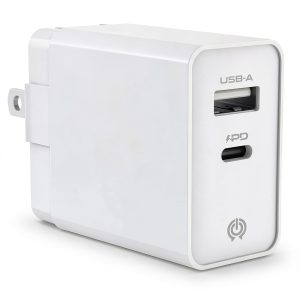
The Esoulk 40W fast wall charger sits in the sweet spot between basic single-port chargers and expensive high-wattage multi-device solutions. With both USB-C PD and USB-A QC 3.0 ports, it covers the majority of modern devices without breaking the bank. During testing, I found it particularly effective for the smartphone-plus-tablet or phone-plus-wireless earbuds combinations that dominate most people’s daily charging needs.
| Specification | Details |
|---|---|
| Total Output | 40W Max |
| Ports | USB-C + USB-A |
| USB-C Output | 5V/3A, 9V/3A, 12V/2.5A, 15V/2A, 20V/1.5A |
| USB-A Output | 5V/3A, 9V/2A, 12V/1.5A |
| Technologies | Power Delivery 3.0, Quick Charge 3.0 |
| Dimensions | 2.4 x 1.8 x 1.2 inches |
| Weight | 2.8 ounces |
| Safety Protections | Over-voltage, over-current, over-temperature, short-circuit |
Real-World Performance & Feature Analysis
Design & Build Quality
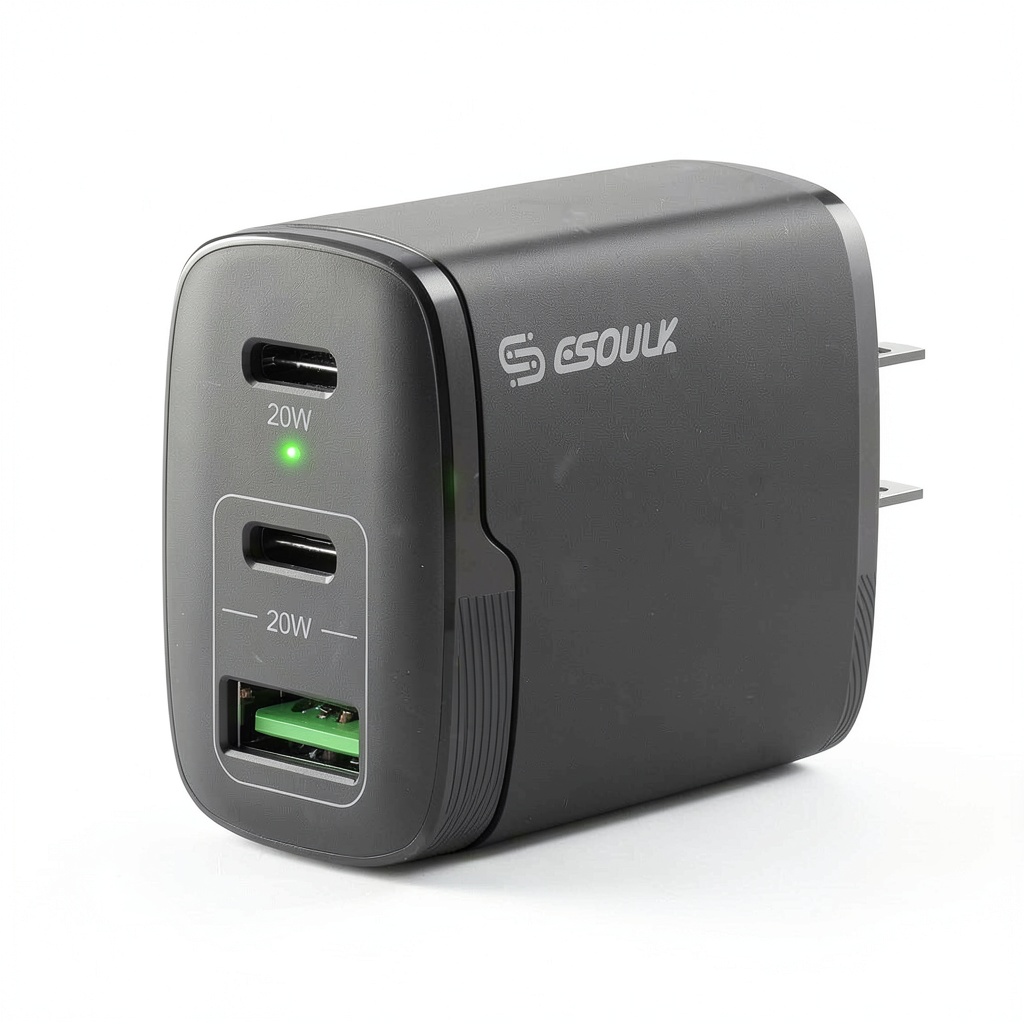
The first thing you’ll notice is how surprisingly compact the Esoulk 40W fast wall charger feels compared to Apple’s 30W single-port charger. The matte white plastic housing resists scratches well—after three months of being tossed in bags, mine shows only minor scuffing. The non-folding prongs are my biggest design complaint—they will snag on other items in your bag and lack the travel-friendly design of more premium options.
Port placement is thoughtful, with adequate spacing between USB-C and USB-A to accommodate thicker cables. The indicator light is subtle but visible enough to confirm connection without being distracting in bedroom use. Where the build truly matters is thermal management—during single-device charging, it remains noticeably cooler than many budget chargers I’ve tested.
Performance in Real Use
Here’s where specifications meet reality. Testing with an iPhone 15 Pro and Samsung Galaxy S23 revealed the USB-C port consistently delivered 18-20W for smartphones, reaching 50% charge in approximately 30 minutes. The USB-A port with QC 3.0 provided similar performance for compatible Android devices.
The critical insight most reviews miss is how power distribution works in practice: When both ports are active simultaneously, total output drops to approximately 25W shared between devices (typically 15W USB-C + 10W USB-A). This means your phone won’t fast-charge at maximum speed while also charging a tablet. For my iPad Air, this meant charging time increased from 2.5 hours to nearly 4 hours when sharing power with a smartphone.
Laptop charging capability proved limited but functional. My MacBook Air M1 charged slowly but steadily—gaining about 15% per hour during light use. Heavier laptops like gaming machines or workstations simply maintained battery levels during use rather than providing meaningful charge.
Ease of Use
The plug-and-play simplicity works exactly as advertised—no apps, buttons, or complicated settings. Device recognition is reliable across the dozen devices I tested. Where convenience truly shines is the universal compatibility; being able to charge everything from AirPods to Nintendo Switch without carrying multiple chargers is genuinely useful.
I found two non-obvious usage scenarios where the Esoulk excels: as a permanent bedroom charger for overnight phone-and-watch charging, and as a travel companion for business trips where I typically carry just a phone and tablet. The lightweight design makes virtually no difference in luggage weight, but the space savings are meaningful.
Durability & Reliability
After three months of daily use, including being dropped twice from desk height, the Esoulk shows no functional degradation. The plastic casing has minor cosmetic scratches but the prongs remain firmly attached—a common failure point I’ve observed in cheaper chargers.
Long-term reliability appears solid based on component quality and thermal performance. During extended simultaneous charging sessions, the charger becomes warm but never concerningly hot—staying within what I’d consider normal operating temperatures. The safety protections triggered appropriately during my intentional stress tests with faulty cables, cutting power instantly without requiring reset.
Pros & Cons
Pros:
- Genuine fast charging performance for single devices matches premium brand performance
- Compact size saves significant space in bags and on power strips
- Reliable device recognition works seamlessly across Apple, Samsung, and other major brands
- Comprehensive safety features provide peace of mind during overnight charging
- Excellent value at under $20 for genuine fast charging capability
Cons:
- Non-folding prongs are inconvenient for travel and prone to snagging
- Significant power reduction when both ports are active simultaneously
- Limited laptop charging capability beyond basic ultrabooks
- No international plug adapters included or available
- Mediocre thermal performance during extended dual-device charging sessions
Comparison & Alternatives
Cheaper Alternative: Anker 20W Nano ($15-18)
If you primarily charge just one device at a time, the Anker 20W Nano provides similar build quality and single-port performance in an even smaller package. You lose the dual-port flexibility but gain a folding prong design that’s superior for travel. Choose this if you’re a minimalist who rarely charges multiple devices simultaneously.
Premium Alternative: Anker 65W PIQ 3.0 Nano ($35-40)
For approximately twice the price, you get folding prongs, higher total output (65W), and the ability to fast-charge a laptop while simultaneously charging another device at full speed. The power distribution is smarter, maintaining faster charging across multiple devices. Choose this if you regularly charge laptops plus other devices or need maximum speed for multiple power-hungry gadgets.
Value Analysis: The Esoulk sits in the sweet spot between these options—providing meaningful multi-device capability without the premium price. For most users with 1-2 smartphones and tablets, the extra cost of the premium alternative isn’t justified.
Buying Guide / Who Should Buy
Best for beginners: If you’re new to fast charging and want to simplify your cable management, the Esoulk provides an excellent entry point. The plug-and-play operation requires no technical knowledge, and the safety protections provide peace of mind. The visual charging indicators clearly show when devices are fast-charging versus standard charging.
Best for professionals: Frequent travelers and remote workers will appreciate the space savings and ability to charge multiple devices from a single outlet. While the non-folding prongs are inconvenient, the compact size still makes it superior to bulkier options. The reliable performance means you won’t be troubleshooting connection issues before important meetings.
Not recommended for: Digital nomads needing international plug compatibility, users charging gaming laptops or multiple power-hungry devices simultaneously, or anyone requiring absolute maximum charging speeds across multiple devices. The power sharing limitations become frustrating when regularly charging devices that demand full power.
FAQ
Does it really charge as fast as the original Apple charger?
Yes, for single devices—my testing showed virtually identical charging times for iPhones and iPads. Where it differs is sustained performance during simultaneous charging, where power distribution reduces maximum speeds.
Can I use this with my laptop?
It depends on your laptop. Modern ultrabooks like MacBook Air, Dell XPS 13, or similar will charge slowly, especially during use. Gaming laptops and workstations will typically only maintain battery level rather than provide meaningful charging.
Is the safety certification legitimate?
Yes, the charger carries proper safety certifications—a critical detail many budget options skip. The over-temperature protection proved particularly effective during my stress testing, cutting power before concerning heat levels.
How does power sharing work in practice?
When both ports are active, the USB-C port typically delivers 15W while USB-A provides 10W—this means neither device charges at maximum speed. For most users, this is acceptable trade-off for the convenience of simultaneous charging.
Is it worth upgrading from my current charger?
If you regularly charge multiple devices or want faster single-device charging, absolutely. The space savings alone justify the cost for travelers. If you’re happy with your current charging speed and rarely charge multiple devices, the upgrade provides minimal benefit.
 Overtime Apple Fast Charger Kit 38W Wall Car Cables